
Conch cooking
Seashell Supply on 11th Sep 2026
From Shell to Table: How Conch Is Prepared for Eating

Conch meat is one of the great underappreciated seafoods of the Caribbean and Gulf Coast — firm, mildly sweet, faintly briny, with a flavor somewhere between clam and abalone. It's been a dietary staple in coastal communities for thousands of years, and in places like the Bahamas, the Turks and Caicos, and the Florida Keys, preparing conch is a kitchen skill passed down through generations with the same matter-of-fact familiarity as shucking oysters or cleaning fish. For the uninitiated, the process looks daunting. It's actually quite straightforward once you understand the steps.
Getting the Animal Out of the Shell
The first challenge is extraction. The conch is attached to the inside of its shell by a strong muscle, and it won't simply fall out if you tip the shell over. There are two main approaches, and experienced conch fishermen will have a strong opinion about which is correct.
The traditional method used by Caribbean fishermen is to knock or drill a small hole in the shoulder of the shell — the area near where the spire meets the body whorl, roughly two to three inches down from the tip. A sharp knife or spike inserted through this hole severs the muscle that anchors the animal to the shell, after which the body can be pulled free through the opening of the shell with a firm, steady pull. This method is fast and efficient in practiced hands, takes only seconds, and is what you'll see done dockside across the Caribbean. The resulting hole is also what creates the natural-looking "fishing hole" that appears on many shells sold in markets.
The alternative is to simply smash the spire of the shell entirely, exposing the animal, though this is harder on the shell and messier. For anyone who wants to preserve the shell intact, the hole method is far preferable.
Once extracted, the whole soft body comes out as a single unit — a somewhat alarming-looking mass of muscle, organs, and the tough, claw-like operculum (the hard plate the animal uses to seal its shell opening). The operculum is discarded immediately. It's not edible and has no culinary use.
Breaking Down the Meat
The body of the conch contains several distinct parts, and not all of them are desirable for eating. The muscle — the large, firm, cream-to-orange colored mass that makes up most of what you extracted — is what you're after. The viscera (the dark, soft internal organs) are typically removed and discarded, though in some traditional preparations they are retained. The mantle, the thin tissue that lined the inside of the shell, is usually trimmed away as well.
What you're left with after basic trimming is a firm, dense piece of muscle that still needs significant work before it's ready to cook. The outer skin of the conch — a thin, tough, brownish-pink layer — must be removed. This is done by scoring and peeling, similar to removing the skin from a piece of squid. Underneath is the pale, clean muscle that will become your finished meat.
At this stage the conch should be rinsed thoroughly under cold running water, inside any folds and crevices, to remove sand, grit, and any remaining visceral material. Conch lives in sandy environments and can carry a surprising amount of sediment. A thorough rinse is not optional.
The Essential Step: Tenderizing
Here is where most first-time conch preparers learn the critical lesson. Conch muscle is extraordinarily tough. If you simply slice it and throw it in a pan, you will end up with something resembling a rubber eraser — technically edible, practically unpleasant. Every traditional conch-cooking culture independently arrived at the same solution: you must beat it.
Tenderizing conch is done with a meat mallet, a heavy rolling pin, or the back of a cleaver — anything with enough weight to break down the dense muscle fibers. The conch is first sliced or butterflied open to create thinner pieces with more surface area, and then each piece is pounded firmly and repeatedly until it softens noticeably and the texture changes from rubbery resistance to something more yielding and pliable. This takes real effort. Don't be timid about it.
In the Bahamas and Caribbean, this step is often done with a conch hammer — essentially just a heavy mallet — on a wooden board, and the sound of conch being beaten is a familiar background rhythm in working fish markets. Some cooks make shallow crosshatch cuts across the surface of the meat before pounding, which helps break down the fibers more quickly.
The alternative to manual pounding is marinating in an acid — citrus juice, particularly sour orange or lime, is traditional — which chemically denatures the proteins and produces a similar softening effect over several hours. This is the method used for conch ceviche and raw conch salad, where the acid both tenderizes and effectively "cooks" the surface of the meat without heat.
Preparing for Specific Dishes
Once tenderized, conch is cut and prepared differently depending on the intended dish.
For conch fritters — probably the most universally beloved preparation — the meat is chopped very finely, almost minced, and combined with diced onion, bell pepper, hot pepper, and seasonings before being folded into a thick batter and fried in spoonfuls until golden brown. The fine chop means tenderizing is less critical for fritters than for other preparations, though it still improves the texture.
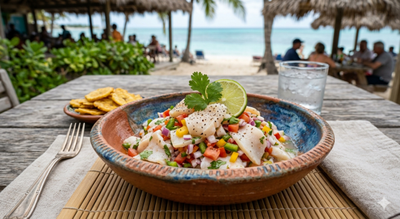
For conch salad — the Bahamian raw preparation that is one of the great street foods of the Caribbean — thinly sliced or diced raw tenderized conch is tossed with diced tomato, onion, cucumber, and scotch bonnet pepper, then dressed generously with fresh lime juice and sour orange juice. The acid finishes any tenderizing the pounding started and gives the meat a slightly opaque, cured appearance. It's served immediately, cold and bright, and eaten with crackers or on its own.
For cracked conch — the Caribbean equivalent of a breaded cutlet — the tenderized conch is left in larger, flattened pieces, dredged in seasoned flour or breadcrumbs, and pan-fried or deep-fried until crisp outside and just cooked through. The key is not overcooking; conch toughens quickly with prolonged heat, so high temperature and a short time in the pan is the right approach.
For conch chowder, the meat is cut into small chunks and simmered low and slow in a broth with potatoes, vegetables, and aromatics. Long, gentle cooking is the one exception to the rule about heat and toughness — given enough time in liquid, conch will eventually become tender again, much like any tough braising cut.
A Few Practical Notes
Fresh conch is always preferable to frozen, but frozen conch — widely available at Caribbean and Latin American grocery stores in coastal areas — is a perfectly workable substitute and arrives already cleaned and tenderized in most cases, which saves considerable effort. If you're working with live conch purchased directly from a fisherman or market, plan to spend 20 to 30 minutes on cleaning and tenderizing before you begin any actual cooking.
Conch has a mild, clean smell when fresh — oceanic but not fishy. Any ammonia smell or strong off odor is a sign of age or improper storage and means the conch should not be eaten. As with all shellfish, freshness is not a negotiable variable.
The Reward
There is something genuinely satisfying about preparing conch from scratch — the physicality of the extraction, the methodical trimming, the vigorous pounding, the gradual transformation of a tough, strange-looking sea creature into something that smells of lime and ocean and hot oil. It's a kitchen process that connects you directly to the fishing communities that have been doing exactly this, in essentially this same way, for thousands of years along these same coasts.
The fritter that comes out of the oil, or the salad that comes together under a squeeze of sour orange, tastes better for knowing what went into making it. That's usually how it goes with things worth doing properly.