
Idea for Crafts Using Clam Shells
Seashell Supply on 4th Sep 2026
Beyond the Chowder: Creative Ways to Use Clam Shells in Crafts
Clam shells are one of the most overlooked craft materials in the natural world. They're abundant, free if you live near the coast or visit one regularly, structurally strong, and possessed of a quiet, understated beauty that suits an enormous range of projects. Unlike the dramatic spires and bold colors of tropical shells, clam shells offer something more subtle — smooth curves, gentle ridges, the soft palette of grays, whites, creams, and tans that somehow always looks elegant rather than plain. Here's a look at what you can actually do with them.
Sourcing and Preparing Your Shells
Before any crafting begins, the shells need to be clean — properly clean, not just rinsed. Shells that retain any organic material will smell, and they'll smell worse over time in a warm house. There are two reliable cleaning methods.
The first is boiling. Submerge the shells in a pot of water, bring it to a boil, and simmer for about five minutes. This loosens any remaining tissue, kills bacteria, and makes the shells easy to scrub clean with a stiff brush. Don't boil for too long — extended boiling can make shells brittle.
The second method, better for delicate shells you don't want to risk cracking, is soaking in a diluted bleach solution — roughly one part bleach to three parts water — for several hours. This kills bacteria and whitens the shells simultaneously. After either method, rinse thoroughly and allow the shells to dry completely in the sun before using them. A light coating of mineral oil or clear matte sealer after drying will bring out the natural color and protect the surface.
If you're collecting your own shells from restaurants — oyster bars and clam shacks are often happy to set shells aside for anyone who asks — you'll be working with larger, more uniform specimens that tend to suit craft projects particularly well.
Jewelry and Small Ornaments
Clam shells scale beautifully down to jewelry applications. Small, thin clamshells — the kind found in abundance on most Atlantic and Gulf Coast beaches — can be drilled with a small diamond-tipped bit (kept cool in water, just as with sea glass) and strung on wire or cord as pendants, incorporated into earrings, or linked into bracelets. The natural ridges and growth lines on the shell exterior add texture that catches light interestingly, and the interior of many clam shells has a subtle iridescence that emerges under close inspection.
For a cleaner look, small clam shells make excellent frames for tiny painted scenes or botanical prints. A steady hand with a fine brush and some acrylic paint can turn a thumbnail-sized clamshell into a miniature canvas — a single flower, a small fish, a geometric pattern. These make charming ornaments hung from ribbon or converted into pendants.
Candles and Tea Lights
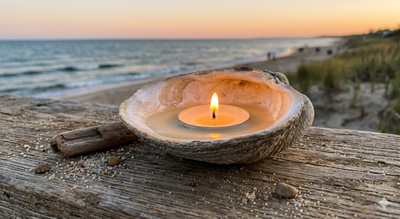
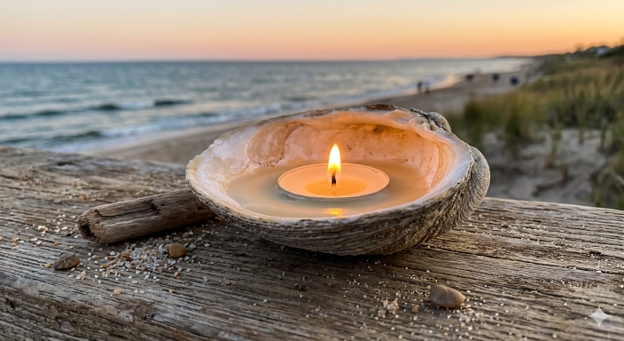
One of the most popular and immediately satisfying clam shell craft projects is using larger shells as candle vessels. Medium to large clam shells — surf clams, quahogs, or chowder clams — have a natural bowl shape that holds a small amount of wax beautifully. The shell acts as both mold and finished container.
To make a shell candle, prop the shell level in a bed of sand or rice, pour a small amount of melted wax (soy wax works particularly well for its clean burn and low melting point), and position a pre-waxed wick at the center before the wax sets. Add essential oils to the melted wax for scent — sea salt and driftwood, coconut, or eucalyptus all suit the material well. Once set, trim the wick to about a quarter inch.
The effect when lit is lovely — the wax glows warmly inside the shell and the slight translucency of thinner shell walls lets light through in a way that no manufactured candle holder quite replicates.
Mosaic and Tile Work
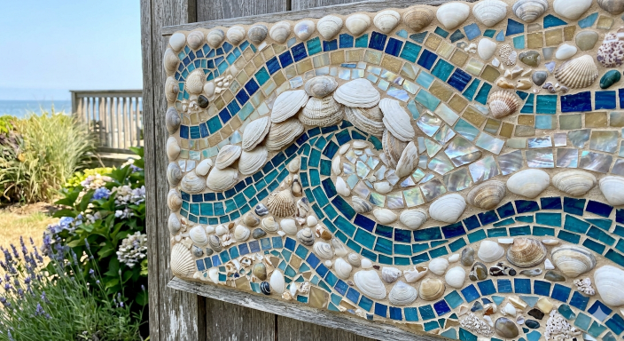
Broken clam shells are, counterintuitively, more useful for certain projects than intact ones. Mosaic work uses shell fragments as tiles, and clam shells — with their consistent thickness, smooth interior surface, and range of natural tones from white to gray to tan to purple — are excellent mosaic material.
The purple hue found in the interior of quahog clams in particular is prized by mosaic artists. This is the same material — called wampum — that northeastern Native American cultures used for centuries to make beads of significant cultural and economic value. The color ranges from pale lavender to deep violet and is entirely natural, produced by pigments in the animal's mantle tissue.
Shell mosaic works well on picture frames, mirror surrounds, plant pots, stepping stones, and decorative boxes. Use tile adhesive to set the pieces and unsanded grout in a complementary color — white or sand tones let the shells read clearly, while a dark gray grout creates a more dramatic contrast.
Wind Chimes and Garden Ornaments
Clam shells make excellent wind chimes, producing a softer, more organic sound than ceramic or metal alternatives. For a basic clam shell wind chime, you'll need a piece of driftwood or a copper pipe as the top bar, fishing line or thin wire, and a collection of shells in graduated sizes.
Drill a small hole near the hinge end of each shell — the thickest part, which is least likely to crack. Hang them at varying lengths from the top bar, arranged so that they'll contact each other in a light breeze. The sound they produce is a gentle, hollow clicking that suits an outdoor space beautifully. Mixing clam shells with a few pieces of sea glass or small driftwood pieces adds visual interest and tonal variety.
For garden ornaments, large clam shells make natural bird baths when set level in the garden and filled with water. Grouped arrangements of large shells around the base of plants create informal edging. Shells half-buried along a garden border have been a staple of coastal cottage gardens for centuries — it looks simple because it is simple, and it works because the shells belong in that aesthetic naturally.
Painted Shells and Decorative Displays
Painted clam shells have a long craft tradition and an equally long reputation for looking cheap when done carelessly and charming when done well. The difference is usually restraint. A shell painted entirely in a single bold color — matte black, deep navy, warm terracotta — and displayed in a grouping is far more elegant than one covered in fussy detail. Metallic paints — gold, copper, bronze — applied with a dry brush technique that catches the ridges and lets the valleys remain dark can produce a result that looks genuinely luxurious.
For a more natural approach, shells can be decorated using the sgraffito technique — painting the entire surface in a solid color, then scratching a design through the paint layer with a pointed tool to reveal the white shell beneath. The contrast is clean and graphic and suits the organic form of the shell well.
Displayed en masse in a glass bowl or apothecary jar, even unpainted shells make a strong decorative statement. The key is quantity — a handful of shells looks like clutter, while a full bowl looks intentional and collected.
Functional Objects
Beyond purely decorative applications, clam shells have genuine functional uses around the home. Large shells make natural soap dishes — the ridged surface keeps a bar of soap elevated and draining rather than sitting in a puddle of water. They work as ring dishes and small jewelry trays on a bathroom counter or dresser. In the kitchen, large shells serve as individual salt cellars or condiment dishes for a dinner party with a coastal theme.
A collection of matching shells used as place card holders — a small card tucked into the natural groove at the shell's hinge — makes an elegant table setting that requires almost no additional decoration. The shells themselves do the work.
The Virtue of the Material
What makes clam shells particularly satisfying as a craft material is their honesty. They don't pretend to be anything other than what they are — objects made by the ocean, with the ocean's palette and the ocean's geometry. The best clam shell crafts work with those qualities rather than against them, using the natural color, form, and texture of the shell as the primary design element rather than covering it up.
The material is free, abundant, biodegradable, and genuinely beautiful in its unaltered state. That's a combination that very few craft materials can match, and it's why people have been picking up shells and making things from them for as long as there have been people near the shore.